송신기 및 수신기
R2026b송신기, 수신기, 송신 시 코히어런스 유지 시스템, 수신 시 코히어런스 유지 시스템
송신기는 방사기가 신호를 전자기장으로 변환하기 전에 신호를 증폭시킵니다. 수신기 전치증폭기 모델은 신호 수집 후 들어오는 신호에 이득을 적용하고 수신기 잡음도 추가합니다. 예제에서는 송신 시 코히어런스를 유지하는 레이다 시스템과 수신 시 코히어런스를 유지하는 레이다 시스템을 보여줍니다.
객체
phased.CustomCascadeComponent | Custom cascade component (R2026a 이후) |
phased.Receiver | Receiver (R2024a 이후) |
phased.ReceiverPreamp | Receiver preamp |
phased.Transmitter | Transmitter |
블록
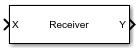 | Receiver | Receiver (R2024a 이후) |
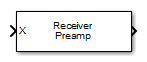 | Receiver Preamp | Receiver preamplifier |
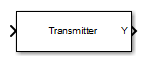 | Transmitter | Amplify and transmit signal |
함수
sensorsig | Simulate received signal at sensor array |
sensorcov | Sensor spatial covariance matrix |
whiteningmat | Whitening transformation of covariance matrix (R2026a 이후) |
noisefigure | Receiver system noise figure of cascaded stages |
noisepow | Receiver noise power |
systemp | Receiver system-noise temperature |
delayseq | Delay or advance sequence |
도움말 항목
송신기 및 수신기
- Transmitter
The transmitter models transmit power, transmit gain, and system loss. - Receiver Preamp
The preamplifier models receiver gain and noise. - Modeling Transmitter and Receiver with Increasing Levels of Fidelity
Use phased.Transmitter and phased.Receiver system objects to model hardware effects prior to radiation from an antenna array. (R2025a 이후)
표준
- Standards and Conventions
This section introduces the concept of baseband signals and defines the local and global coordinate systems used in the toolbox. - Units of Measure and Physical Constants
Phased Array System Toolbox™ uses the International System of Units (SI).

